


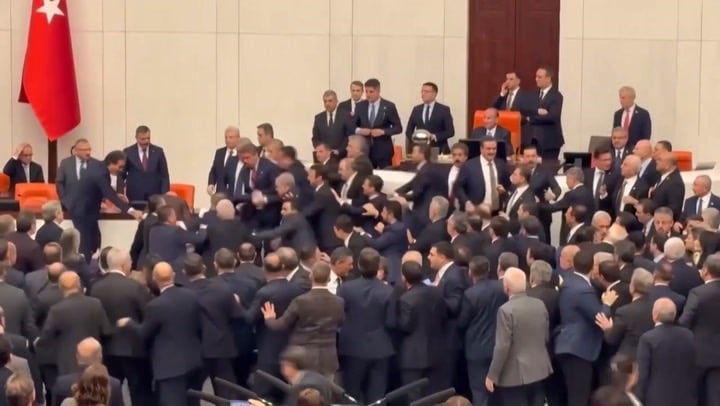
Turkey’s parliament descended into violence on Wednesday as opposition lawmakers attempted to physically prevent the swearing-in of a former chief prosecutor accused of orchestrating politically motivated trials against President Recep Tayyip Erdoğan’s rivals.
Akın Gürlek, the former Istanbul chief prosecutor at the centre of the controversy, was eventually sworn in as Justice Minister despite fierce resistance from opposition MPs who view his appointment as a direct threat to judicial independence. Ruling party legislators formed a protective barrier around Gürlek as he took the oath whilst chaos erupted throughout the chamber.
The fury stems from Gürlek’s record overseeing high-profile prosecutions against opposition Republican People’s Party members that critics characterize as politically driven. Most notably, he filed a massive indictment against Istanbul mayor Ekrem İmamoğlu, Erdoğan’s chief rival, accusing him of 142 offences linked to corruption and organised crime.
Gürlek sought a prison sentence exceeding 2,000 years for İmamoğlu, who was arrested last year. Supporters of the mayor insist the case represents political persecution rather than legitimate prosecution. The government maintains the judiciary operates independently from political influence.
The parliamentary brawl saw MPs shoving, shouting and throwing punches as tensions boiled over. Lawmakers tore at shirts and jackets whilst grappling violently around the speaker’s podium. Some tumbled to the floor as chairs were knocked over during the melee.
Footage captured the chaotic scramble as MPs attempted to break free from opponents or pull others into the confrontation. The speaker was forced to suspend proceedings for 15 minutes before order could be restored to the chamber.
The appointment has further escalated tensions amid ongoing corruption probes that have resulted in hundreds of arrests of officials from CHP-run municipalities. Opposition parties argue the prosecutions represent a coordinated campaign to weaken their political infrastructure ahead of future elections.
Alongside Gürlek’s controversial justice appointment, Erdoğan named Mustafa Çiftçi, governor of Erzurum, as interior minister. The Official Gazette stated outgoing ministers had “requested to be relieved” of their duties, though no official explanation was provided for the cabinet reshuffle.
The timing of the appointments carries significant political weight as Turkey debates constitutional reforms whilst simultaneously pursuing a peace initiative with the PKK aimed at ending a decades-long conflict. Parliament is widely expected to approve reforms supporting the peace process.
The dual focus on domestic political consolidation through appointments like Gürlek whilst negotiating with Kurdish insurgents suggests Erdoğan is positioning his government for major policy shifts. The violence in parliament demonstrates the depth of opposition concern about the direction of Turkish democracy under the reconfigured cabinet.
Critics argue Gürlek’s elevation from prosecutor to Justice Minister represents the formalization of what they describe as the weaponization of the judicial system against political opponents. His oversight of the sprawling case against İmamoğlu, which encompasses 142 separate charges, epitomizes opposition fears about prosecutorial overreach.
The parliamentary confrontation marks one of the most violent sessions in recent Turkish political history, with the physical altercation reflecting the breakdown of traditional political norms. The government’s ability to push through Gürlek’s appointment despite the chaos demonstrates the ruling party’s parliamentary majority and willingness to advance controversial figures into key positions.
As constitutional reform debates proceed and peace talks with the PKK continue, Gürlek’s tenure as Justice Minister will likely prove pivotal in determining whether Turkey’s judicial system maintains independence or becomes further aligned with executive branch priorities.
