

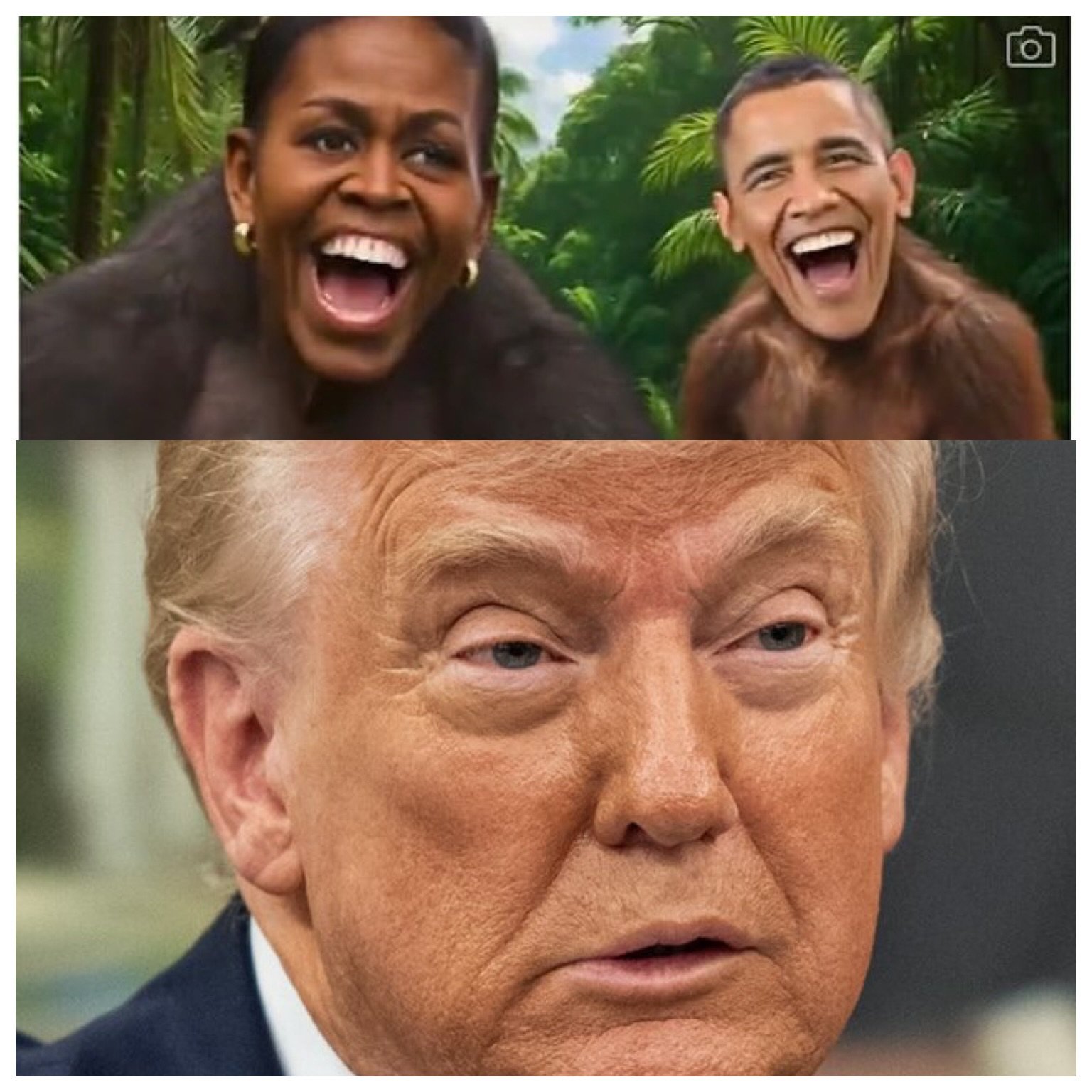
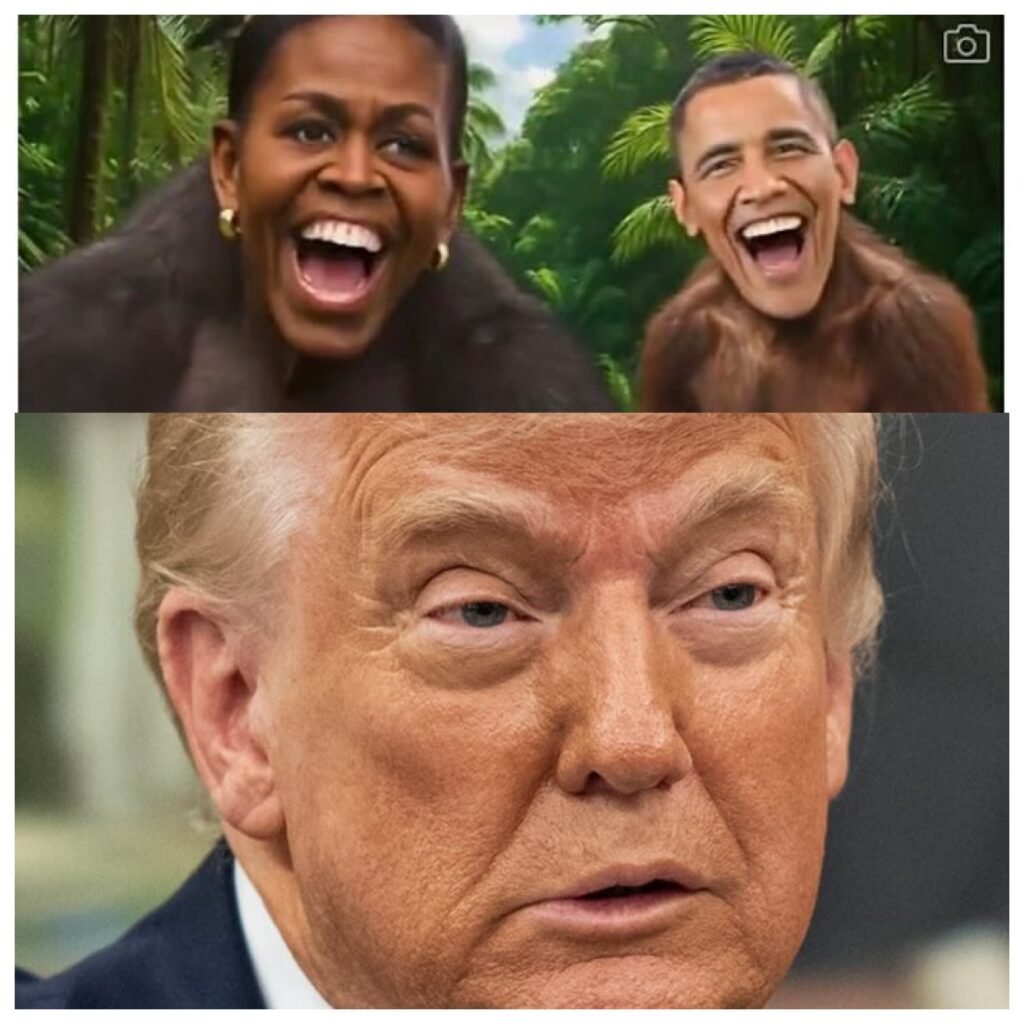
President Donald Trump has sparked widespread condemnation from across the political spectrum after sharing a video on Truth Social that depicted Barack and Michelle Obama with their faces superimposed onto apes’ bodies.
The controversial AI-generated clip, which Trump reposted to his social media platform late last night, shows the former president and first lady imposed on primate bodies accompanied by The Tokens’ song ‘The Lion Sleeps Tonight.’ The video originally belonged to a pro-Trump account on X before being shared by the President to his Truth Social followers.
Accusations of racism have dominated responses to the post, with political figures from multiple parties condemning the imagery. California Governor Gavin Newsom’s press office wrote on X: “Disgusting behavior by the President. Every single Republican must denounce this. Now.”
The backlash has extended beyond partisan lines, with critics highlighting the offensive historical context of depicting Black individuals as primates. The video’s broader focus on Trump’s accusations of election fraud during the 2020 election was overshadowed by the inflammatory imagery.
It remains unclear whether Trump was aware of the Obama depictions when he shared the content with his followers. Shortly after posting the controversial video, the President shared separate content detailing the history of the black conservative movement in the Republican Party.
The incident marks the latest escalation in Trump’s longstanding feud with Barack Obama, which began decades ago when Trump promoted claims that the 44th president was born outside the United States. The two men have maintained a hostile relationship throughout Trump’s political career, with the current president regularly targeting his predecessor on social media.
The video originated from Trump’s supporter base on X, formerly known as Twitter, before being reposted to Truth Social, the platform Trump launched after being banned from major social networks following the January 6 Capitol riot.
Newsom’s office specifically called for Republican Party members to publicly denounce the imagery, attempting to force GOP politicians into taking a stance on the racially charged content. The statement represents a direct challenge to party unity over Trump’s social media activity.
Trump’s pattern of reposting content from supporters without apparent full vetting has generated previous controversies. The President frequently shares material from his base on Truth Social, which serves as his primary social media outlet.
The juxtaposition of the offensive Obama imagery with Trump’s subsequent post about black conservatives in the GOP has raised questions about whether he recognized the problematic nature of the video or whether the timing was coincidental.
Political observers are monitoring whether prominent Republicans will respond to calls for denunciation, with the controversy testing party loyalty against public criticism of racially sensitive content. The reaction from GOP figures in coming days will likely shape the ongoing narrative surrounding the incident and Trump’s social media conduct.
The backlash represents a rare moment of cross-party agreement in condemning presidential conduct, though the extent to which Republican officials will publicly criticize Trump remains to be seen given the party’s historical reluctance to challenge the President directly.
