


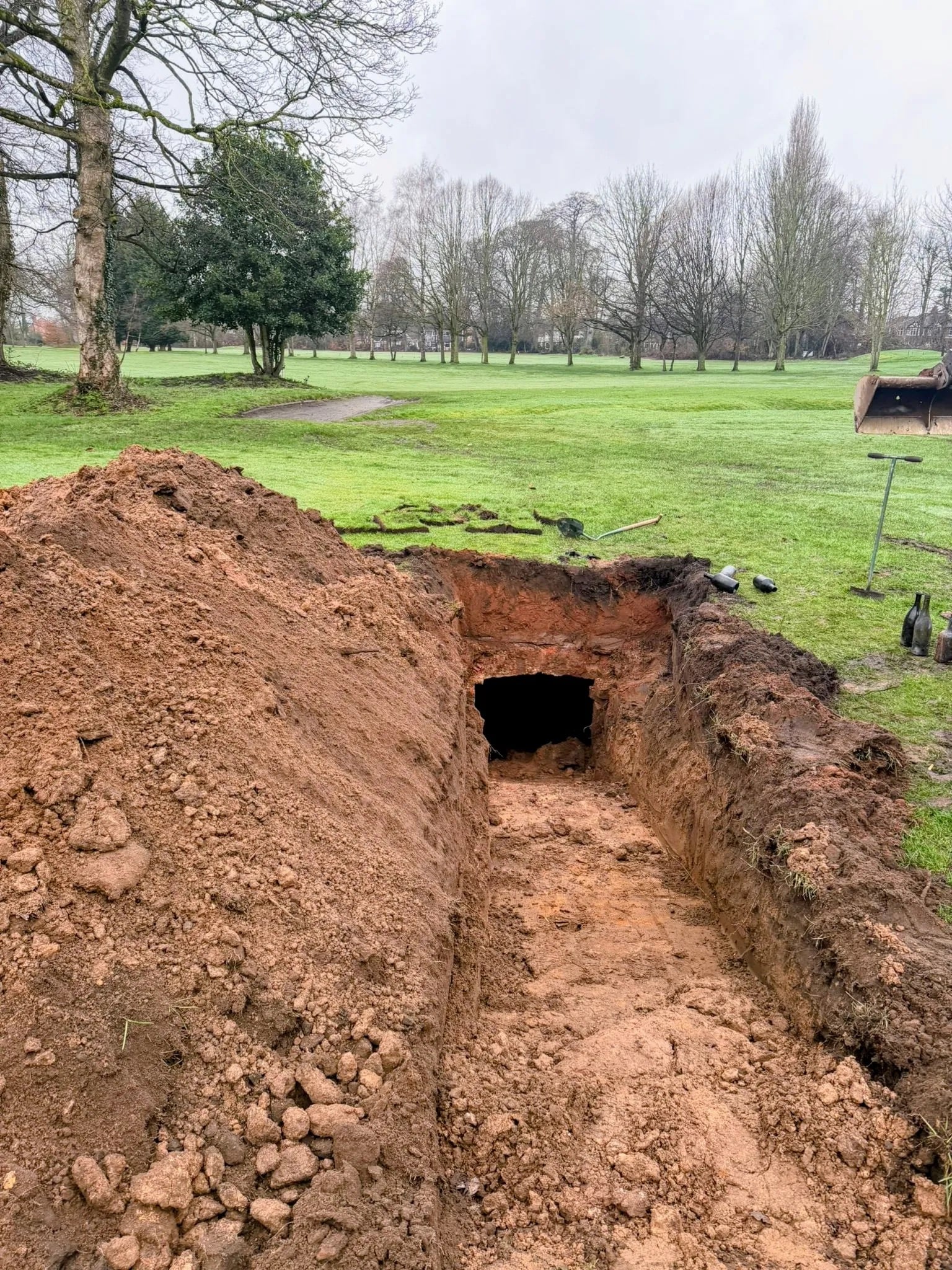
A routine morning inspection at a Greater Manchester golf club took an unexpected turn when a sinkhole led staff to a hidden brick wine cellar believed to have been untouched for more than 100 years, complete with dozens of antique hand-blown glass bottles.
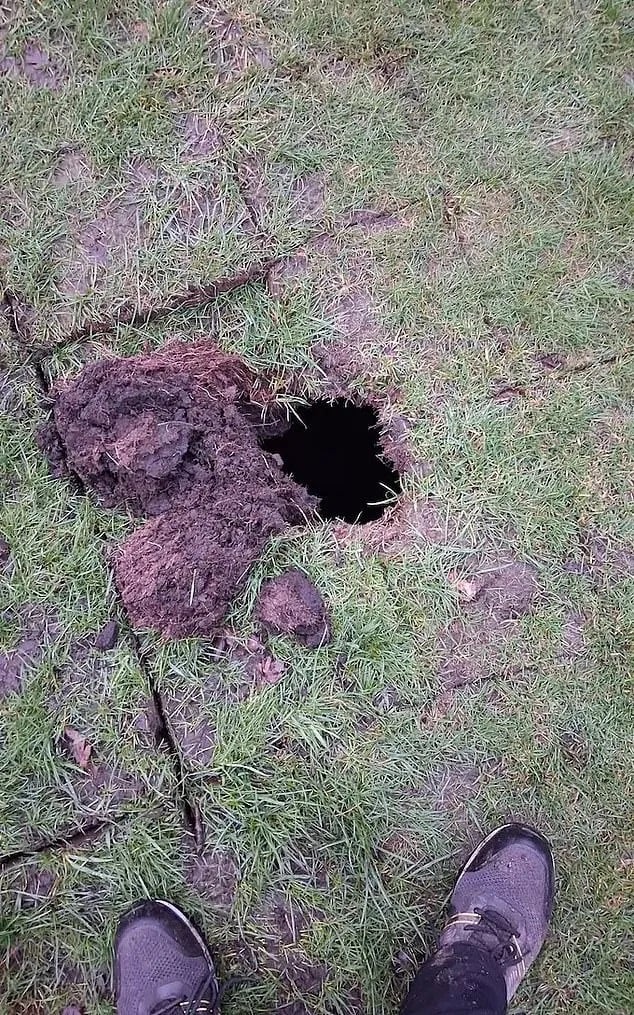
The discovery was made at Davyhulme Park Golf Club in Trafford, thought to be the fourth oldest golf club in England. Deputy head green keeper Steve Hopkins first noticed the sinkhole during his morning round and initially suspected a collapsed drain beneath the 13th hole — a routine problem on any course.
“When you find a sinkhole on the course it usually means that a drain has collapsed,” Hopkins said. “So we’re thinking it’s just a drain that needs digging out and clearing and repairing but as we dug deeper the chasm underneath just opened up.”
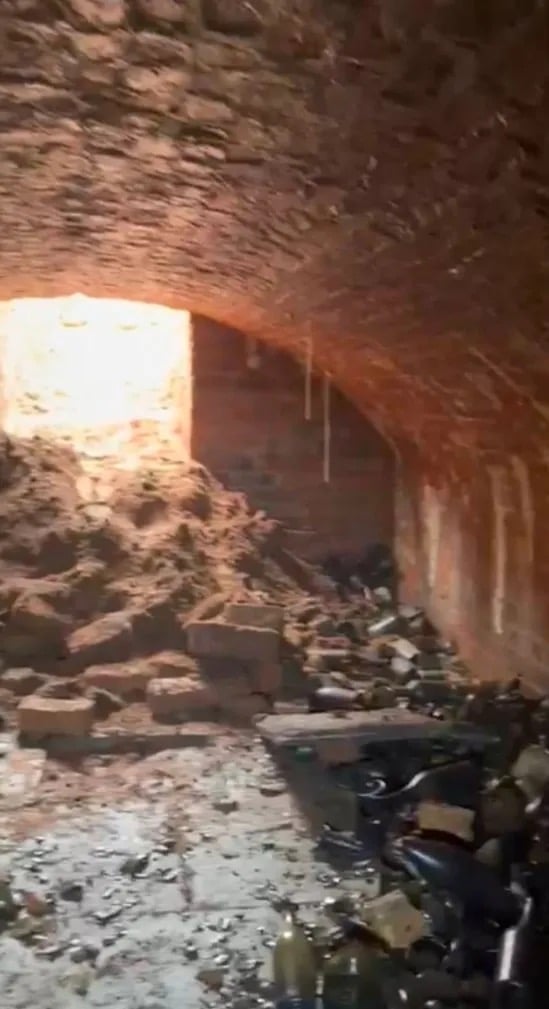
What emerged as the excavation progressed was far more significant than a broken drain. A brick-built structure appeared beneath the turf, and Hopkins climbed inside to investigate with a torch. “I was basically the first person to go in there for over a hundred years,” he said.
Inside, he found an assortment of empty glass bottles of varying shapes and sizes. “They’re all odd shapes and stuff so they’re obviously extremely old bottles,” he said. “They all look like they’ve been hand-blown.”
The cellar is believed to be a remnant of Davyhulme Hall, a manor house with origins dating back to the 12th century according to Trafford Council, originally built by the Hulme family. The hall passed to Robert Henry Norreys in 1844, who is credited with founding the golf club on the same grounds. Following Norreys’ death in 1887, the hall was left to his nephew J. B. N. Entwisle of Rochdale, who failed to sell it. The building was subsequently demolished in 1888, and a portion of the land was purchased by the golf club in 1923.
The section of the course where the cellar was found is known among members as The Cellars. Hopkins noted that one end of the structure contains a blocked doorway that may lead further into a larger complex of underground rooms, though this has not yet been investigated.
Word of the find has generated considerable excitement among the club’s membership, with some calling for the cellar to be preserved and incorporated as a visible feature on the course. Hopkins said discussions are ongoing about what should happen next. “It’s a selling point on the course because it’s obviously our history, but it’s up to the club,” he said.
No decision on the cellar’s future has yet been announced by the club.
