


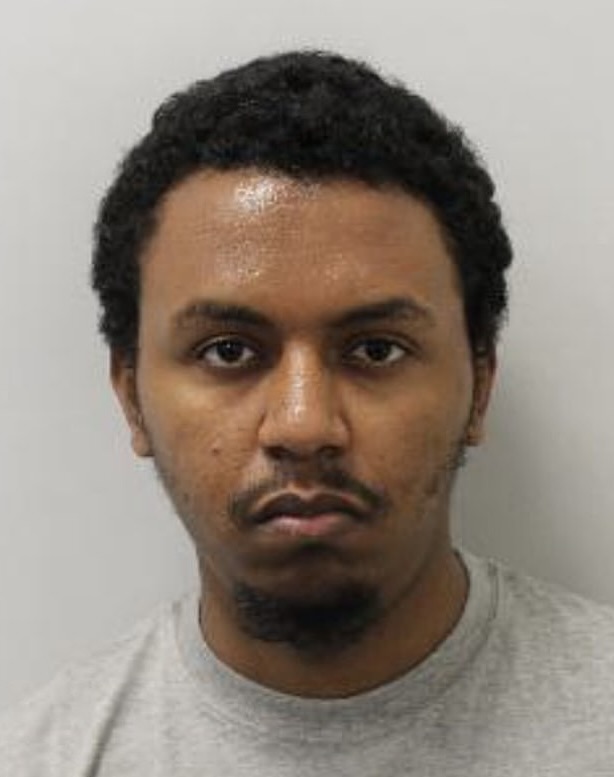
A grandmother was stabbed to death by a stranger who had purchased a hunting knife over the internet just an hour before the attack, despite living in a staffed mental health rehabilitation home where his behaviour had been escalating undetected.
Jala Debella, 24, killed medical secretary Anita Mukhey, 66, in front of shocked passers-by at a bus stop in Burnt Oak Broadway, north London, at approximately 11.50am on May 9 last year. He stabbed her 18 times before walking casually away from the scene as members of the public rushed to help the victim.
CCTV footage shown to the court captured Debella walking north along Edgware Road, passing the bus stop, before returning to the location where Mrs Mukhey was attacked. Thirty seconds later, she could be seen collapsing in the road. The first 999 call was made at 11.48am.
The weapon, identical to one Debella had ordered online, was later recovered by police. Forensic analysis confirmed it carried DNA from both the defendant and his victim.
At the Old Bailey on Friday, Debella was made subject to a hospital order under Section 37 of the Mental Health Act and a restriction order under Section 41, meaning he can be detained indefinitely. He will be held at Ashworth High Secure Hospital in Merseyside.
The defendant was not present in court, having been deemed too unwell to stand trial for murder. A jury at a trial of issue found he had committed the act of killing Mrs Mukhey.
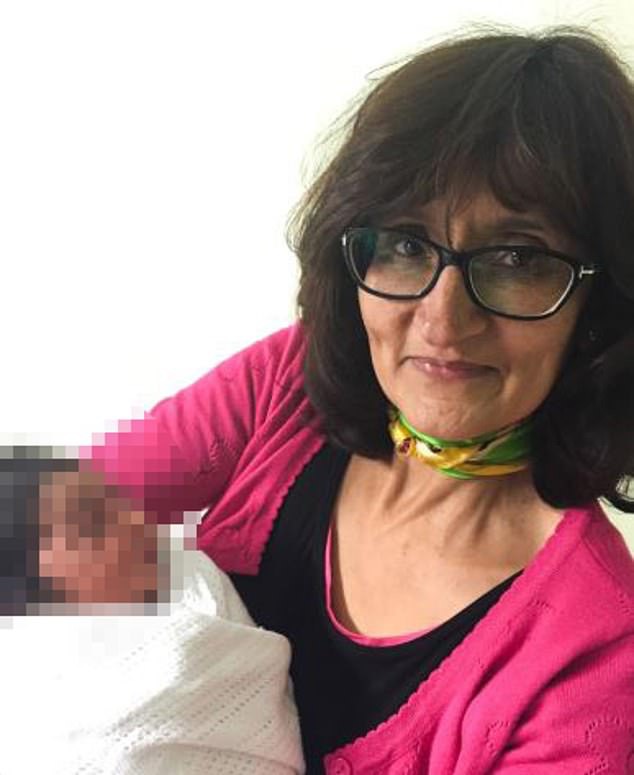
Judge Philip Katz KC, addressing his remarks to an empty dock, said: “Anita Mukhey was the heart of the family. She was a wife, mother and grandmother, aged 66 when she was stabbed to death by a complete stranger on a busy main road in north London.”
The court heard that Debella, who suffered from paranoid schizophrenia, had been detained under the Mental Health Act on at least three occasions prior to the attack. His medical consultant, Dr Melanie Higgins, confirmed arrangements had been made for his continued admission to the high-security facility.
Despite this history, Debella had been assessed by consultant psychiatrists as psychologically stable and safe to be managed in the community. He was living in a Care Quality Commission-registered mental health rehabilitation home in Colindale at the time of the killing.
During that period, however, he had been searching online for “killing video” and visiting websites containing graphic violent content. The court was told his attack on Mrs Mukhey mirrored violence he had watched online.
Her husband Hari criticised the handling of Debella’s case by mental health services, saying: “The man was known to mental health services. He was assessed by psychiatrists and was deemed stable to be managed in the community. It leaves me wondering how risk is truly assessed. Words spoken in an assessment room did not reflect the reality of his true intentions.”
He described his wife as the centre of their home. “She was an organiser, a steady presence. She held everyone together without asking for recognition,” he said. “Her absence has left a silence that nothing can fill. As her husband I live with that absence every day.”
The family questioned in a statement how Debella had been able to acquire weapons while residing in a staffed facility. They said: “That disconnect is hard to accept. It raises serious questions about how risk is assessed, and about whether current models are equipped to detect danger that develops beyond the spoken words of the consulting room.”
Mr Mukhey thanked the “brave members of the public” who went to his wife’s aid.
Chris Badger, chief inspector of adult social care for the CQC, extended condolences to the family but confirmed the services provided at the home did not fall within the regulator’s scope of powers. The facility’s registration had been made dormant following engagement with police.
Judge Katz declined to express an opinion on the safety of the regime at the residential home but added: “No doubt others will consider it, hopefully soon.”
An inquest into Mrs Mukhey’s death has been opened and adjourned.
