


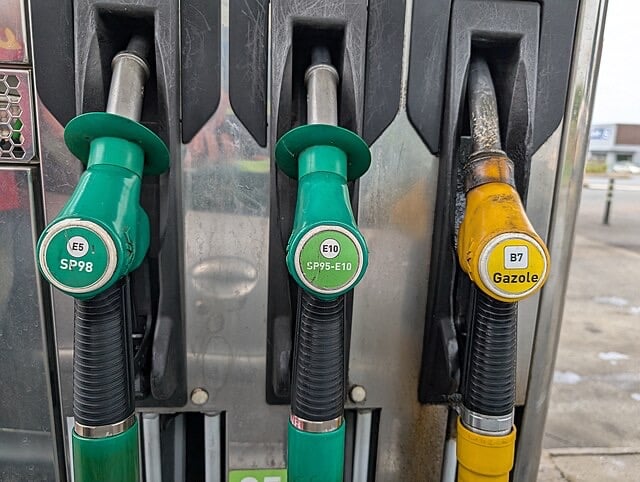
Motorists in rural areas are facing a double burden from surging fuel costs, paying up to 2p per litre more than their urban counterparts whilst being far more dependent on their vehicles due to limited public transport alternatives. Analysis by the RAC Foundation reveals that countryside forecourts have increased prices by up to 10 per cent more than urban stations during last month’s record-breaking surge, intensifying pressure on communities already hit hardest by the cost-of-living crisis.
The findings show rural petrol prices have reached an average of 156.15p per litre compared with 154.07p in urban areas, whilst diesel stands at 186.54p in the countryside against 185.09p in towns and cities. With average petrol pump prices across the country soaring by a record 20p a litre last month, the rural premium means drivers outside major population centres are bearing disproportionate costs at a time when they have fewer options to reduce car dependency.
“The car is not an optional extra but is a lifeline”
AA president Edmund King emphasised the acute vulnerability of rural communities to fuel price shocks. “Drivers and businesses in rural areas are almost totally dependent on road transport due to the lack of public transport and longer distances travelled,” he said. “The car is not an optional extra but is a lifeline to rural dwellers.”
Mr King highlighted that rural drivers face compounding pressures, noting they are “being hit from both sides, as the fuel prices in rural areas are higher and more of them are dependent on diesel which has doubled compared to the rate of petrol since the Iran conflict started.”
The economics of rural forecourts
Steve Gooding, director of the RAC Foundation, characterised the situation as a double burden for countryside motorists. “Not only are those in the countryside paying more for fuel, they probably drive further too,” he said. “For many outside our bigger towns and cities using a car is, by necessity, built into their daily lives, leaving no alternative but to drive to get to work, the shops or doctor.”
The analysis reveals that filling the average 55-litre tank in a family car rose £11 for petrol and £22 for diesel between 1 and 31 March across the country. For rural drivers, however, this was on average £1.10 more for petrol, with some rural areas experiencing the same additional burden for diesel, which surged by an average of 40p a litre nationally during March.
The rural premium reflects structural features of countryside fuel markets. Lower customer volumes at individual forecourts mean fixed costs are spread across fewer transactions, whilst delivery expenses to remote locations add further charges that urban stations serving higher traffic do not face. Competition also tends to be more limited in rural areas, where distances between forecourts reduce the price pressure that clusters of urban stations generate.
Chancellor’s VAT windfall as pressure mounts for tax relief
The crisis has generated substantial additional revenue for the Treasury through VAT receipts on higher fuel prices. Separate data indicates drivers have collectively paid around £600 million more than they would have done if pump prices had remained at pre-conflict levels. This translates to approximately £100 million in extra VAT for Chancellor Rachel Reeves, as the 20 per cent levy applies to the inflated prices.
Mr King called for the Treasury to redirect this windfall toward supporting rural forecourts. “The Government is quids in due to the extra VAT paid to The Treasury as pump prices have rocketed, so perhaps some of that ‘free’ money should be used to target rural garages to reduce their prices and keep them going as essential community hubs,” he said.
Last month’s price increases represented the biggest monthly surge on record, exceeding even the spikes triggered by Russia’s invasion of Ukraine in 2022. The current crisis stems from Iran’s retaliatory blockade of the Strait of Hormuz following joint US-Israeli military operations, which has squeezed Western oil supplies and sent global energy markets into turmoil.
Labour holds firm on fuel duty increase despite European cuts
Despite mounting calls from motoring organisations, the Government is refusing to abandon its planned 5p per litre increase to fuel duty, which will be implemented incrementally from September. The rise will add approximately £3 to the cost of filling an average tank, compounding the burden on drivers already struggling with record prices.
The Labour Government’s stance contrasts sharply with responses across Europe, where several countries have slashed fuel taxes to provide relief to hard-pressed motorists amid the crisis. This divergence places Britain in an increasingly isolated position, maintaining planned tax increases whilst continental neighbours move in the opposite direction.
Motoring groups have intensified their campaign for tax relief, pointing to the Treasury’s substantial VAT windfall as evidence the Government can afford to support drivers without damaging public finances. The argument holds particular force for rural communities, where fuel costs represent a larger share of household budgets and where alternatives to driving are often non-existent.
The rural mobility trap
The geographic disparity in fuel prices intersects with fundamental differences in transport infrastructure and lifestyle patterns between urban and rural Britain. Public transport provision in the countryside has declined substantially over recent decades, with bus route cancellations and reduced service frequencies leaving many villages without viable alternatives to private vehicles.
Rural residents typically travel longer distances for work, shopping, healthcare and education, making fuel costs a more significant component of household expenditure than for urban dwellers with access to walking, cycling and public transport options. The combination of higher per-litre prices and greater mileage requirements creates a compounding effect that analysis of simple price differences understates.
The issue also carries implications for rural businesses, which depend on road transport for both customer access and supply chains. Higher fuel costs feed through to delivery charges, employee travel expenses and customer accessibility, potentially undermining the viability of countryside enterprises already operating on thin margins.
Policy choices and political pressures
The Government faces competing pressures as it formulates its response to the fuel crisis. Treasury officials prioritise maintaining tax revenues to fund public services, particularly given fiscal constraints and borrowing targets. Fuel duty has been frozen since 2011, representing substantial foregone revenue that any further cuts would compound.
However, the political optics of implementing tax increases whilst pocketing VAT windfalls from crisis-driven price surges present challenges for Labour. The September fuel duty rise was announced before the Iran conflict erupted, but proceeding with it amid record pump prices risks public backlash, particularly in rural constituencies where car dependency is highest.
The European dimension adds further complexity. If continental countries successfully moderate fuel costs through tax cuts whilst Britain maintains or increases duties, the policy divergence becomes more politically salient. Voters may question why the UK Government cannot provide similar relief, particularly given the additional VAT revenues flowing to the Treasury.
Britain’s fuel duty freeze and its consequences
Britain’s fuel duty has remained frozen at 57.95p per litre since 2011, making the planned 5p increase the first upward adjustment in over a decade. The extended freeze has cost the Treasury an estimated £80 billion in foregone revenue over that period, though successive governments have judged the political cost of increases to outweigh the fiscal benefits.
The freeze has also meant that fuel duty has declined substantially in real terms, with inflation eroding its value year by year. This erosion has reduced motoring’s contribution to public finances relative to other revenue sources, shifting tax burdens toward income, consumption and property.
Environmental campaigners have long argued that low fuel duties and frozen rates undermine decarbonisation goals by failing to price in the climate costs of fossil fuel consumption. However, the immediacy of cost-of-living pressures tends to dominate political calculations, particularly when price shocks affect millions of voters simultaneously.
The rural dimension complicates environmental arguments further. Whilst urban residents can potentially shift to public transport, cycling or walking in response to higher fuel costs, rural communities lack such options. Any price-based mechanism to reduce driving therefore falls disproportionately on countryside residents who cannot meaningfully adjust their behaviour.
What comes next for pump prices and policy
Fuel prices will continue tracking global oil markets and the Strait of Hormuz situation. If diplomatic efforts to reopen the waterway succeed or alternative supply routes absorb the disruption, prices could moderate relatively quickly. Conversely, if the blockade persists or military escalation damages additional energy infrastructure, further increases remain possible.
The September fuel duty rise remains government policy, though political pressure could yet force a reversal or postponement if prices remain elevated. Labour would face difficult choices between fiscal discipline and responding to public distress, particularly if Conservative opposition exploits the issue effectively.
For rural communities, the structural disadvantages creating the pricing premium are unlikely to resolve quickly. Forecourt economics in low-density areas will continue favouring higher prices unless specific interventions target those markets, whether through tax relief, direct subsidies or regulatory measures to limit price differentials.
The rural cost-of-living multiplier
The fuel price crisis exemplifies how cost-of-living pressures affect rural and urban Britain differently. Higher heating costs due to older, less efficient housing stock, limited access to budget supermarkets, and greater reliance on private transport combine to create a rural cost-of-living multiplier that analysis based on national averages understates.
These disparities carry political implications in a country where rural constituencies have traditionally leaned Conservative but showed increasing willingness to shift allegiances in recent elections. Labour’s ability to retain or expand support in countryside areas may depend partly on demonstrating sensitivity to rural-specific economic pressures, of which fuel costs rank among the most immediate and visible.
The RAC Foundation’s analysis provides concrete evidence of geographic inequality that campaigners can leverage in pressing for targeted relief. Whether the Government proves responsive to such pressure will test its commitment to reducing regional disparities, a stated priority that fuel pricing patterns directly contradict.
Key Facts and Background
How much more are rural drivers paying per litre?
Rural petrol prices average 156.15p per litre compared to 154.07p in urban areas, a difference of 2.08p. Rural diesel averages 186.54p against 185.09p in urban areas, a 1.45p difference.
What was the record monthly price increase in March?
Average petrol prices across the country rose by 20p per litre during March, the largest monthly increase on record, exceeding even the spikes caused by Russia’s invasion of Ukraine in 2022.
How much extra has the Treasury gained in VAT?
The Government has collected approximately £100 million in additional VAT receipts due to higher fuel prices, as the 20 per cent levy applies to the inflated pump prices.
When does the planned fuel duty increase take effect?
Labour’s planned 5p per litre fuel duty increase will be implemented incrementally from September 2026, adding approximately £3 to the cost of filling an average 55-litre tank.
How long has fuel duty been frozen?
Fuel duty has remained frozen at 57.95p per litre since 2011, representing over a decade without increases despite inflation eroding its real-terms value.
Why do rural forecourts charge more?
Lower customer volumes spread fixed costs across fewer transactions, delivery to remote locations costs more, and reduced competition in areas with fewer forecourts allows higher prices to persist.
