


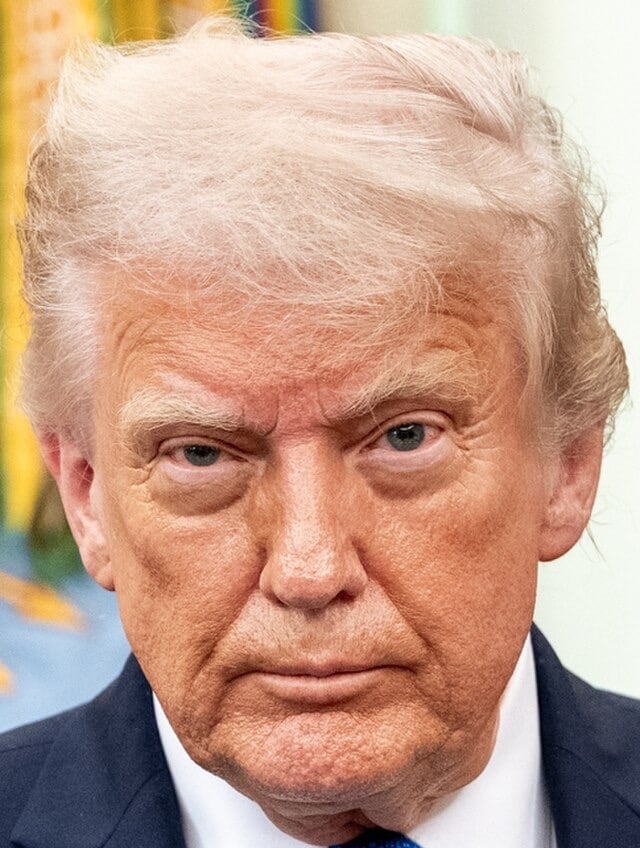
Donald Trump has launched a furious broadside against America’s European allies, accusing them of cowardice for refusing to commit military forces to reopen the Strait of Hormuz, as new research warns that Britain faces greater exposure to the unfolding supply chain crisis than any other country on the continent.
Writing on his Truth Social platform, the US president declared that “without the U.S.A., NATO is a paper tiger”, and warned that Washington would “remember” the refusal of its allies to assist in securing the vital waterway. Trump has spent the past week pressing European nations to join American naval efforts in the strait, through which roughly 20 per cent of the world’s oil and liquefied natural gas passes. The de facto closure of the passage by Tehran has triggered what analysts describe as the largest oil supply shock in history, sending energy prices surging across global markets.
Despite the pressure, European leaders have held firm. Prime Minister Sir Keir Starmer joined counterparts from Germany, France, Italy, Japan and the Netherlands on Thursday in signing a joint statement calling on Iran to immediately cease drone and missile attacks, halt the laying of mines, and end what the signatories described as “interference with international shipping.” The statement asserted that freedom of navigation was “a fundamental principle of international law” and warned that the effects of Iran’s actions would be felt most acutely by the world’s most vulnerable populations. Italy, Germany and France later clarified that any military contribution they might consider would only come as part of a multilateral effort following a ceasefire — not as an immediate deployment.
American forces, meanwhile, have moved aggressively. A-10 Warthog aircraft and Apache attack helicopters have been deployed along the southern Iranian coastline to engage fast-attack watercraft and intercept drones. General Dan Caine, Chairman of the Joint Chiefs of Staff, confirmed on Tuesday that the A-10 is “now engaged across the southern flank, targeting fast-attack watercraft in the Strait of Hormuz.”
The economic stakes are considerable. A team of Austrian researchers from the Complexity Science Hub has modelled the potential consequences of a prolonged closure, concluding that global exports worth up to $1.2 trillion could ultimately be affected. Their simulations suggest that disruptions of under two weeks would have limited impact, but blockages extending beyond four weeks risk triggering cascading failures across international supply chains, with consequences that could persist for months.
For the United Kingdom, the findings carry particular weight. Britain imports approximately $12 billion worth of goods through the strait annually, with Qatari liquefied natural gas and propane alone accounting for nearly $5.9 billion of that figure. The researchers conclude that the UK faces a “genuine vulnerability”, with limited capacity to substitute LNG supply in the short term — a situation likely to drive up energy costs for British consumers the longer the standoff continues.
Co-author Stefan Thurner warned that the strait had already been closed for around three weeks. “After four weeks, cascading effects in the supply chains due to disrupted shipping in the Strait will appear,” he said. “And this leads to disproportionate losses.”
