

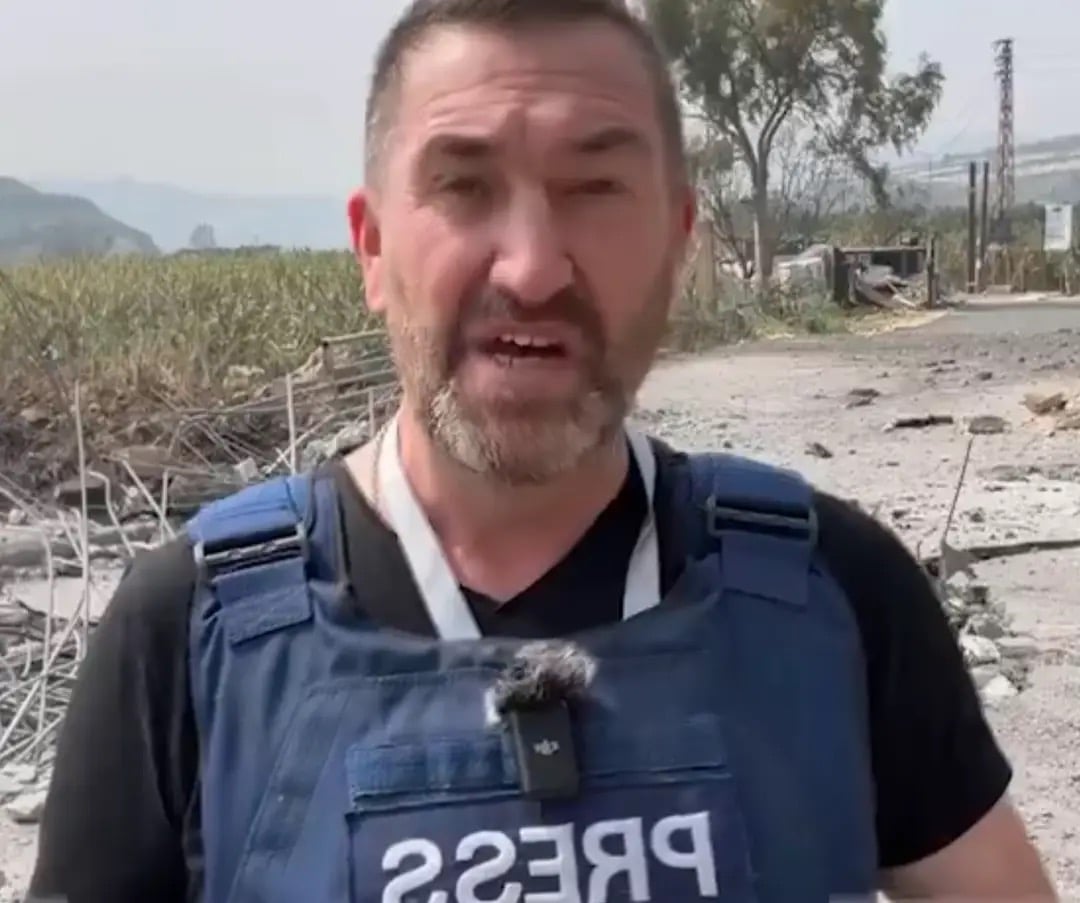
A British journalist working for Russian state broadcaster RT has been wounded in southern Lebanon after a missile strike struck a bridge while he was live on camera, according to reports emerging on Wednesday.
Steven Sweeney, who was reporting on rocket attacks in the region, was mid-broadcast when an explosion detonated on the bridge directly behind him. The blast sent debris into the air and knocked the camera to the ground. Audio captured in the aftermath recorded Sweeney swearing and repeatedly asking “where”, as other voices shouted in the background.
RT editor-in-chief Margarita Simonyan said the incident occurred when an Israeli Defence Forces aircraft fired on a vehicle carrying Sweeney and his cameraman as they crossed a bridge in the south of the country. Both men were taken to hospital, where they were reported to be conscious while doctors assessed them for shrapnel injuries.
Israel has been conducting military operations in Lebanon, and the strike adds to growing international concern over the safety of journalists working in active conflict zones across the region.
Sweeney, who reports for RT — a broadcaster funded by the Russian government — has had a turbulent relationship with British authorities in recent years. In a social media post last year, he described himself as having been “effectively exiled” from the United Kingdom after being detained by counter-terrorism officials at Heathrow Airport. He did not elaborate further on the circumstances of that detention.
Just one day before he was wounded, Sweeney had posted on social media in response to the death of Mohammad Sherri, director of political programmes for Hezbollah’s Al-Manar television channel. “Targeting journalists is a war crime,” he wrote on 18 March.
Sherri’s death had already drawn attention to the dangers facing media workers operating in Lebanon amid the ongoing conflict. Sweeney’s own wounding, captured in footage that has since circulated widely, is likely to intensify that debate.
The Committee to Protect Journalists has consistently documented the heightened risks faced by reporters in conflict zones across the Middle East, though neither that organisation nor UK authorities had issued a formal statement at the time of publication.
Sweeney and his cameraman remain under medical observation.
