


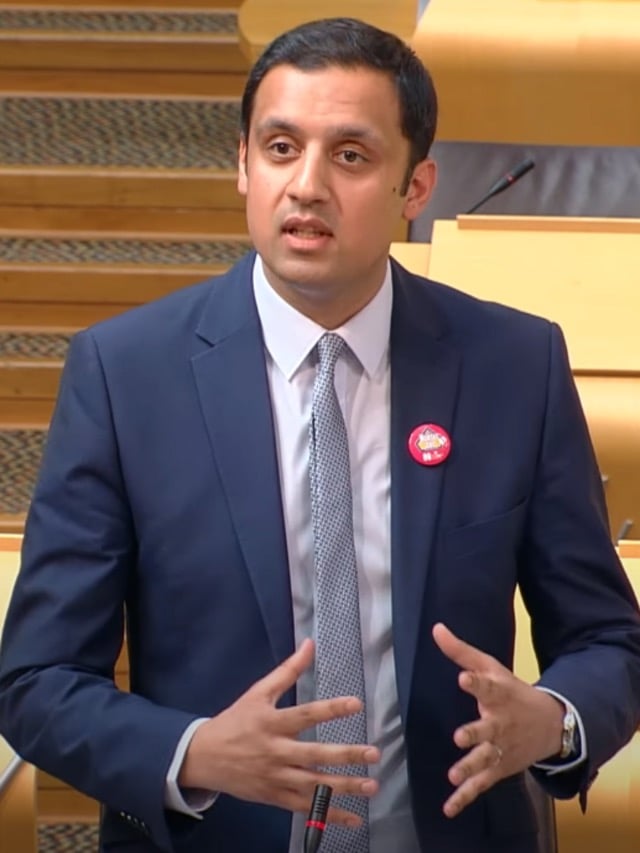
Anas Sarwar has become the first senior Labour figure to publicly demand Keir Starmer’s resignation, stating the Prime Minister’s leadership has become a “distraction” that must end.
The Scottish Labour leader made the dramatic call this afternoon, breaking with the Prime Minister despite describing their relationship as a “genuine friendship.” Sarwar emphasized his primary loyalty lies with Scotland rather than the Westminster leadership.
“The distraction needs to end and the leadership in Downing Street has to change,” Sarwar stated. The intervention represents a significant escalation in pressure on Starmer, who already faces historically low approval ratings and trails Reform UK in national polls.
Sarwar acknowledged the personal difficulty of his decision whilst explaining his reasoning. “I have to do what’s right for my country and Scotland,” he said, positioning his call for Starmer’s resignation as a matter of Scottish interests rather than Westminster politics.
The Scottish Labour leader stated he maintains a genuine friendship with Starmer but clarified his first priority is to Scotland. The remarks suggest Sarwar views the ongoing crisis engulfing the Prime Minister as damaging to Labour’s prospects north of the border.
Sarwar’s intervention comes as Starmer faces multiple crises including the Mandelson-Epstein scandal, economic difficulties and the resignations of key staff including chief of staff Morgan McSweeney and communications director Tim Allan.
The call from a Labour leader for the party’s own Prime Minister to step down represents an unprecedented development in the current political crisis. Scottish Labour operates with some autonomy from the UK party but remains formally part of the same organization.
Sarwar’s statement that “the distraction needs to end” echoes concerns among Labour MPs that the Mandelson affair and other controversies are preventing the government from focusing on policy delivery and economic management.
The timing of Sarwar’s call, coming hours after the double resignation of senior Downing Street staff, suggests coordination may have occurred among Labour figures concerned about Starmer’s leadership sustainability.
Scottish Labour has historically maintained a complex relationship with the UK party leadership, often positioning itself separately on devolved issues whilst supporting the broader Labour project. Sarwar’s break with Starmer on leadership represents a more fundamental rupture.
The intervention raises questions about whether other senior Labour figures will follow Sarwar’s lead in publicly calling for Starmer to resign. Cabinet ministers have so far remained publicly supportive, though reports suggest private concerns are mounting.
Starmer now faces pressure from his own party in Scotland alongside opposition demands for his resignation and internal Labour polling showing members would prefer alternative leaders. Over half the public say he should resign according to recent surveys.
The Prime Minister has not yet responded to Sarwar’s call for his resignation. Downing Street is expected to address the remarks later today as the political crisis deepens.
